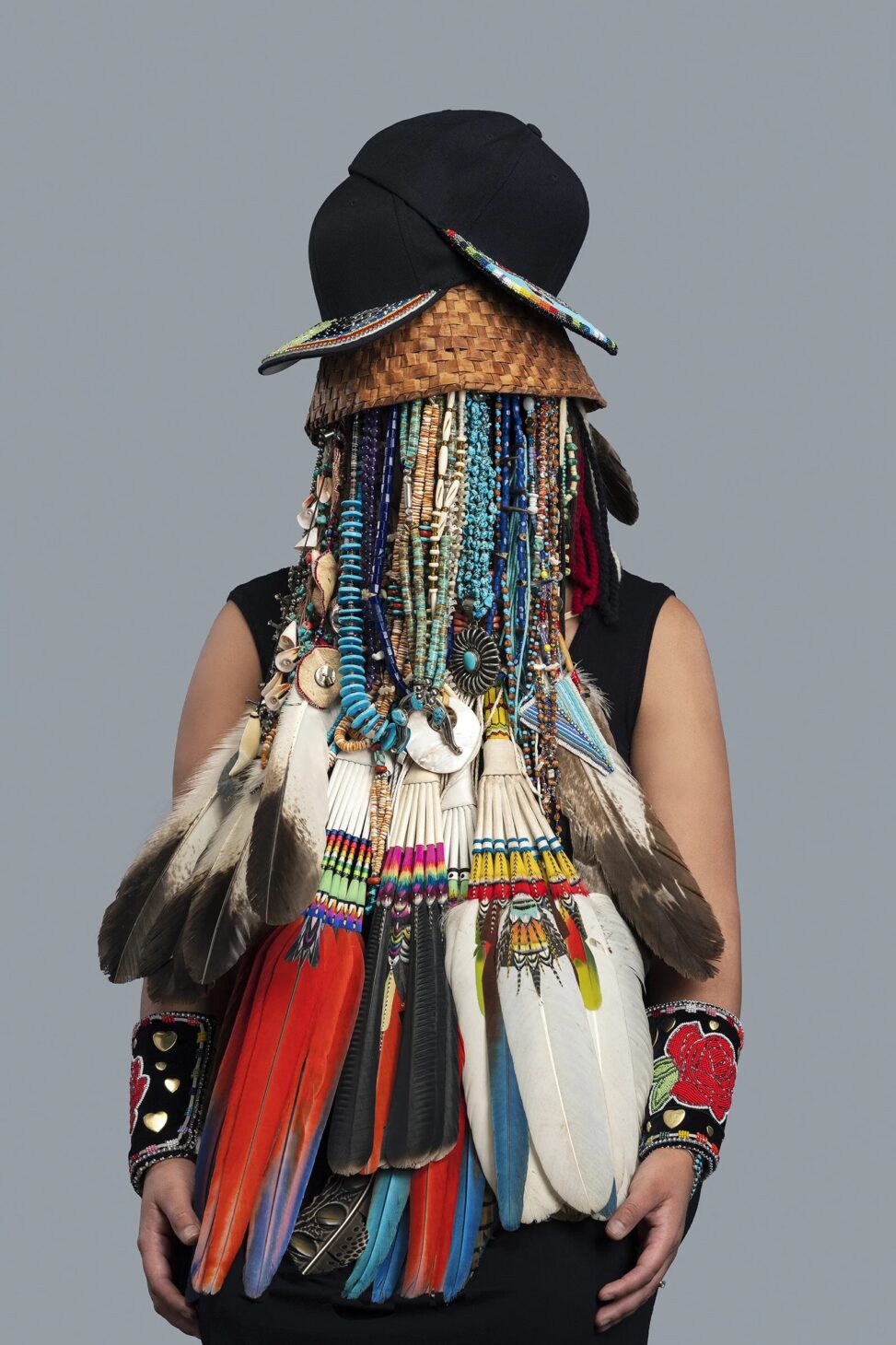
Dana Claxton is a contemporary artist who works with photography, and film. A lot of her work focuses on Indigenous identity and how traditional culture is represented today. One of her well-known pieces, Headdress, shows a person wearing a traditional feathered headdress in a very dramatic and detailed photographic style. This artwork connects to Indigenous traditions, especially the use of ceremonial traditions, like headdresses, which have deep cultural and spiritual meaning. But instead of just showing the tradition in a historical or cultural setting, Claxton places it in a modern art context. Thus, Claxton doesn’t just preserve tradition she reimagines it. By combining traditional Indigenous symbols with contemporary photography, she both honors the culture and challenges how people have misunderstood or stereotyped it.
Headdress is a photographic piece that focuses on a person wearing a detailed feathered headdress. The medium is important because photography allows Claxton to control things like lighting and focus to make the image more powerful. The subject is usually placed in the center, which makes them feel important and draws your attention right away. One of the main visual elements is the headdress itself. The feathers spread out around the head, creating a strong shape that almost frames the person’s face. You can see a lot of detail in the feathers, like their texture and differences in color. The lighting is often dramatic, with a darker background that makes the subject stand out even more. The colors are a range of tones, like browns, whites, and darker shades, sometimes more colorful depending on the feathers used or beads included. which connect back to the natural materials used in the headdress. The person’s energy is calm and serious, which gives a sense of strength and confidence.
Claxton uses tradition in a very direct way since the headdress is clearly recognizable and not hidden. However, by putting it into a modern photographic format, she changes how we see it. Instead of it being something only connected to ceremonies, it becomes something that exists in the present. It also makes viewers think about how Indigenous culture is often seen or misunderstood.
The feathered headdress is an important cultural item in many Plains Indigenous groups, including the Lakota people. It’s not just something you wear for decoration, headdresses are earned through acts of bravery, leadership, or contributions to the community. Each feather can represent something meaningful, like an achievement or spiritual connection. The materials used are also important. Feathers, especially eagle feathers, are considered sacred and are connected to spirituality and respect. Making a headdress takes skill and care, and there are cultural rules around who can wear one and when it can be used.
Visually, headdresses are designed to stand out, with feathers arranged in ways that show movement and presence. But their purpose goes beyond appearance, they represent identity, honor, and responsibility within the community.
Over time, headdresses have often been misunderstood by non-Indigenous people. They are sometimes treated like costumes or used in ways that ignore their real meaning. This kind of misuse takes away from their cultural importance and can be disrespectful. Understanding the tradition properly helps show why it’s such a powerful symbol. When a traditional object like a headdress is shown in a modern art gallery, its meaning can change. In Claxton’s work, the headdress is no longer part of a ceremony it becomes something that is looked at by a wide audience. This shift can make people think differently about it, especially if they didn’t understand its meaning before.
Claxton’s work shows how mixing tradition with modern art can actually strengthen the tradition. By using photography, she brings attention to Indigenous culture in a way that feels current and relevant. Instead of the tradition being stuck in the past, it continues to evolve. At the same time, her work also critiques how Indigenous culture has been viewed. The way the subject is presented with strong lighting and a serious energy forces the viewer to take it seriously. It doesn’t allow people to see it as a stereotype or something casual. The audience also affects the meaning. Indigenous viewers might feel a sense of pride or recognition, while non-Indigenous viewers might be challenged to rethink their assumptions.
Overall, Claxton both preserves and challenges tradition. She respects its meaning but also questions how it has been represented, making her work powerful and relevant today. Because of her hybridity of mixing the tradition with modern art it also allows a lot more people to see it, along with begin to understand it. Which opens a lot of doors for understanding and respecting but also questioning and others critiquing.