Introduction
El Anatsui is a contemporary African artist who is known for transform recycled materials into big installations that reference local traditions and global histories. One of his most recognized works, Man’s Cloth created in 2001, draws inspiration from traditional Ghanaian Kente cloth while radically reimagining its material and meaning. Kente cloth, historically made from silk and cotton, is associated with royalty, status, and cultural identity in West Africa.
Anatsui preserves and transforms tradition, creating a hybrid form that honors the visual language of Kente but at the same time he challenging its material authenticity and historical context. By using recycled bottle caps and aluminum, he change the focus from handcrafted textile production to global consumption and represents colonial trade histories, particularly the legacy of alcohol exchange in Africa. Rather than only continuing a tradition, Anatsui use his culture and his art in a contemporary and conceptual framework that allows to function as a cultural tribute and a critique of economic and historical systems.
Description of the Artwork
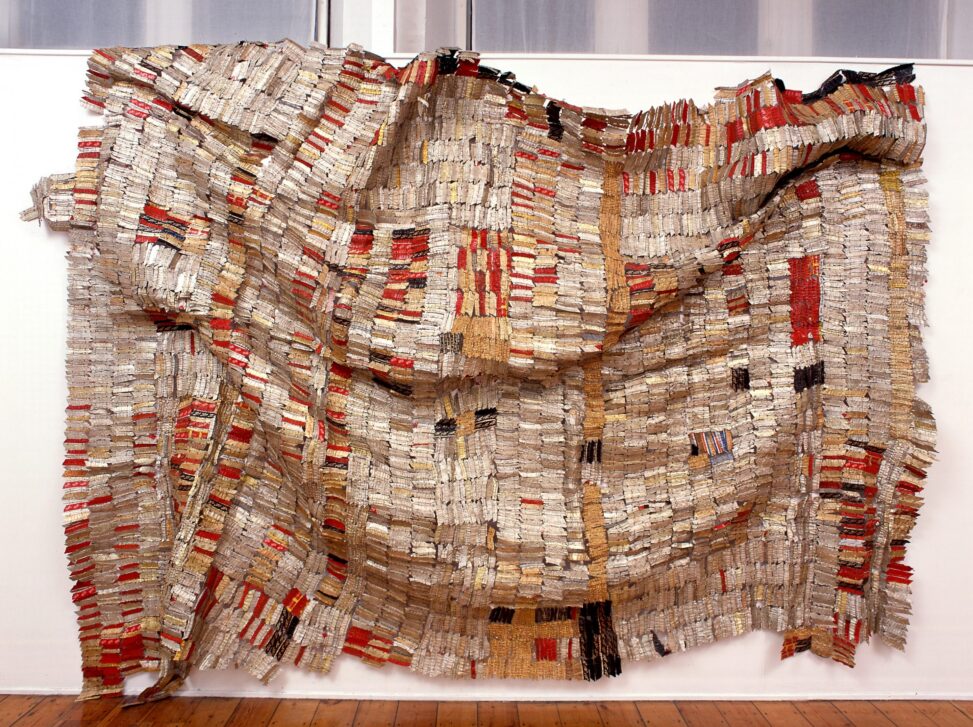
Man’s Cloth is a large artwork that hangs on the wall and looks like a piece of fabric. However, instead of being made from cloth, it is made from thousands of flattened and conect bottle caps, pieces of aluminum, and copper wire. Even though the materials are hard, the artwork bends and drapes like fabric.
The surface of the artwork shines with colors like gold, red, and black. These colors are arranged in blocks and patterns that look very similar to traditional Kente cloth. From far away perspective the person can look the artwork soft and woven, but when they get closer, they will see the individual bottle caps and metal pieces. The patterns are carefully organized, but they are not perfect. Small differences in the materials create texture and make the piece feel more natural and handmade. The shiny surface reflects light, which makes the artwork change depending on where you stand.
Anatsui clearly uses tradition in this artwork. The design strongly resembles Kente cloth, so the reference is easy to recognize. However, the materials completely change its meaning. Instead of handmade threads, the piece is made from recycled objects. The bottle caps also connect to the history of alcohol trade in Africa during colonial times. Because of this, the artwork is not just about tradition it also makes a statement about history, trade, and modern consumer culture.
Description of the Tradition
The tradition that Anatsui refers to is an African textile art, especially Kente cloth from Ghana. It is usually made from silk and cotton threads and is woven by hand using special looms. The cloth is created in long strips, which are then sewn together to make larger pieces.
Kente cloth is known for its bright colors and geometric patterns. Each pattern has a meaning and can represent ideas like history, or moral values. Because of this, Kente is not just decorative it is also a way of communicating cultural messages. Additionally, Kente cloth is worn during important events such as weddings or funerals as a tradiction. It is strongly connected to royalty and high status. In the past, some designs were only worn by kings and important leaders.
Making Kente cloth takes a lot of skill and time, and the knowledge is passed down through generations. It is an important part of Ghanaian culture and identity. Today, it is also a symbol of pride and cultural heritage, especially after colonial history
Critical Analysis
When tradition changes over time or moves into a new context, the meaning can also change. In the case of “El Anatsui”, the idea of Kente cloth change from being a wearable cultural object to being part pf a large wall artwork shown in galleries and museums around the world. As a result, Anatsui’s version is displayed for viewing rather than wearing. This change in location and purpose transforms the tradition from something personal and cultural into something global and conceptual. Moreover, hybridity in Anatsui’s work strengthens and challenges tradition. On one hand, he use Kente-like patterns that helps to keep the visual identity of the tradition alive, making it recognizable to the audience. An on the other hand, replacing fabric with recycled bottle caps changes the meaning, it introduces new ideas about waste, globalization, and history. This mix of old and new shows that tradition is not fixed it can grow and adapt over time.
Anatsui is preserving and critiquing heritage. He preserves it because he is keeping the patterns and cultural references of Kente cloth. At the same time, he critiques history by using materials connected to colonial trade, especially alcohol. This suggests that tradition is shaped not only by culture but also by historical events. Because of this, his works is not only visual, but also encourages viewers to think more deeply about the past and its connection to the present.