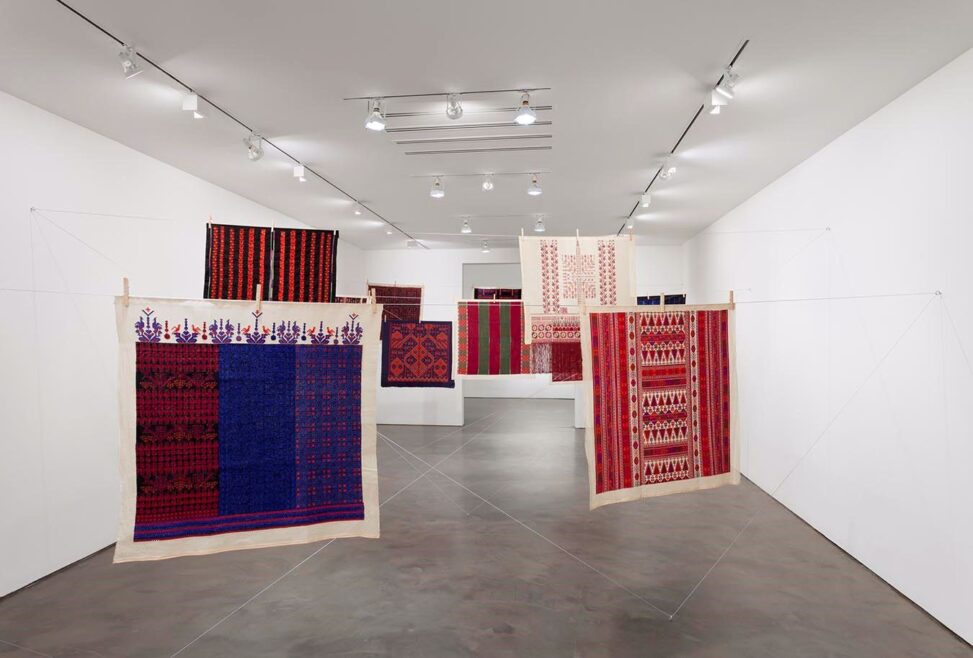
Twelve Windows, a 2012 installation by contemporary artist Mona Hatoum, both profoundly engages with and transforms cultural tradition. The twelve textile panels that make up the artwork were inspired by Palestinian embroidery, or tatreez, a traditional craft with significant cultural and historical value. Hatoum examines identity, displacement, and memory in this work, especially as it relates to her own Palestinian ancestry and diasporic experience. By putting antique fabrics in a modern gallery environment and changing their patterns and presentation, Hatoum destabilizes and reimagines tradition rather than merely upholding it.
Twelve Windows is a massive work made up of hung textile panels in a gallery setting. Each panel is constructed of cloth that has geometric designs embroidered on it, giving it the appearance of a window or screen. The flexible grid-like arrangement of the panels, which may be hung from wooden supports or placed on walls, gives the room a feeling of both openness and separation. Moving around the exhibit allows the viewer to experience the piece from a variety of angles.
The artwork’s materials are important. Traditional Palestinian tatreez, which usually entails hand-stitched designs on fabric using coloured threads, is referenced in the embroidered textiles. These patterns show up in striking hues like red, black, and blue in Hatoum’s artwork, standing out against lighter backdrops. Nevertheless, the designs seem disjointed, warped, or lacking rather than completely symmetrical. This departure from conventional accuracy points to a break in cultural continuity.
The installation visually establishes a conflict between familiarity and alienation. The panels may seem ornamental or beautiful from a distance, yet a closer look reveals inconsistencies and abstractions. Additionally, the hanging arrangement highlights the concept of “windows,” implying peering through, across, or into various cultural viewpoints. Viewers may physically travel around the piece thanks to the wide space between the panels, which emphasizes themes of displacement and movement. All things considered, the artwork creates a multilayered and intricate visual experience by fusing traditional craft methods with modern installation techniques.
Palestinian needlework, or tatreez, is the custom mentioned in Twelve Windows. This custom is strongly ingrained in Palestinian culture and has a lengthy history. Traditionally, tatreez has been used to adorn clothing, especially dresses, with elaborate geometric designs that frequently have symbolic connotations pertaining to social standing, family, or geography. Brightly coloured threads and handwoven cloth are common materials, and the procedure calls for dexterity, patience, and talent.
The style of traditional embroidery is characterized by symmetry, repetition, and careful craftsmanship. Unlike contemporary reinterpretations, traditional works tend to follow established patterns and conventions. However, the cultural and political context of Palestine has also influenced the meaning of tatreez, particularly in relation to displacement and diaspora. As a result, embroidery has become not only a decorative practice but also a symbol of resilience and cultural preservation. Hatoum’s work draws on this rich tradition while simultaneously recontextualizing it in a contemporary art set
Twelve Windows by Mona Hatoum poses significant queries regarding the ways in which tradition alters as it travels through distance, time, and cultural settings. Hatoum turns Palestinian embroidery from a means of cultural expression into a conceptual piece of art by removing it from its intended use and putting it in a gallery. This change modifies its significance because the textiles are now objects of observation and interpretation rather than being worn or utilized in daily life.
Hybridity is a crucial component of the art.Hatoum creates a hybrid form that simultaneously upholds and undermines tradition by fusing traditional craft with modern installation art. The image of tradition as solid or unchanging is challenged by the broken patterns and unusual presentation, even while the use of embroidery preserves a connection to cultural legacy. Rather, the approach proposes that cultural practices change and adjust to new situations.
The crowd plays an important part as well.Different interpretations may result from viewers not instantly realizing the cultural significance of the patterns when they see the piece in a gallery.This demonstrates how perspective and context influence meaning. Furthermore, the “window” theme reflects the feeling of diaspora and the gap between the past and present by implying both visibility and detachment. In the end, Twelve Windows aggressively reimagines tradition rather than merely preserving it. As a potent instrument for examining identity, memory, and cultural change, Hatoum’s work shows that tradition can be both preserved and altered.