Introduction
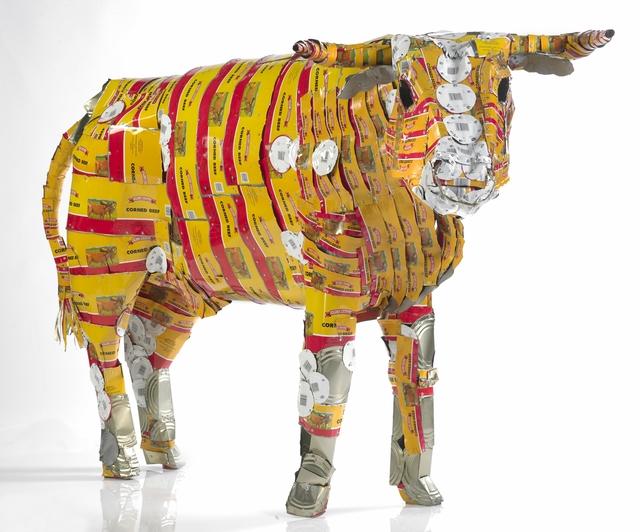
Michele Tuffery’s art, Povi Christkeke (Christchurch Bull) focus on colonialism, global consumption and pacific cultural traditions. Tuffery is a samoan born artist from New Zealand. He is the artist who creates art using everyday items influenced by pacific forms. He creates a life-size bull in this image from cans of flattened palm corned beef, which were formerly imported into Pacific Island villages. In the art, he visualize the history of Pacific canned corned beef. This imported product symbolizes the colonial systems of trade and changing way of life, even if it became one of the popular consuming habits. Making the cans look like a bull, he pays attention on both the animal used to produce beef and the global supply chain that turn it into packaged food.
However, Tuffery criticizes and questions tradition rather than just carrying it on. An animal related and culturally focused symbol from classic sculpture is transformed by the artist to represent colonial trade, industrial production, and cultural change. In such a mix, the artwork recognizes the Pacific traditions and at the same time challenges the historical forces that redefined them.
Description of the Artwork
Povi Christkeke (Christchurch Bull) was created by carefully cutting, shaping, and assembling flattened metal cans of corned beef into the shape of a standing bull. It is a three-dimensional life-size sculpture, which provides it with a huge physical presence in exhibition places. The yellow and red printed labels of those cans are still visible forming a pattern on the whole body of the animal. Instead of using usual sculpting tools like wood, stone, metal, or clay Michel Tuffery uses discarded industrial packaging. The bull’s body, legs, horns, and tail are formed by molding and stacking the metal sheets. The surface is covered with circular metal lids resembling decorative features, which provide the surface with a texture and remind the viewer that the sculpture is a construction of a structure.
The bull appears to be very strong and powerful. The animal has some strength and presence because of its spread horns and forward-facing skull. As someone walks around the artwork, the metallic surfaces reflect light, creating a visually dynamic effect. The idea of tradition is both directly and clearly present in the work. The sculptural animal forms are present in numerous cultures, and bulls and cattle have always been associated with agriculture and food production. However, Tuffery replaces mass-produced packaging with natural materials. The repetition of the brand names forms a very impressive visual effect to the organic shape of the animal.
As a result, the sculpture works on multiple levels. On one hand it resemble realistic sculpture of an animal and, on the other hand, the visible packaging exposes the commercial and industrial processes in modern food systems. Such a mixture of familiar objects and unforeseen resources encourages the audience to rethink the ordinary products and their cultural connotations. Such a mixture of familiar objects and unforeseen resources encourages the audience to rethink the ordinary products and their cultural meanings.
Description of the Tradition
The custom described in Povi Christkeke (Christchurch Bull) is linked to Pacific Island cultural customs, particularly those related to food, ritual exchange, and communal gatherings. In Pacific cultures, animals like pigs and cows are symbols of prosperity, hospitality, and social standing. They are frequently prepared and served during feasts, festivities, and family gatherings. Traditionally these events are celebrated by preparing locally raised animals and food by communal effort using locally and naturally produced materials such as woods, earth, leaves and, also these gatherings helps improve social and cultural relationship.
However, during the colonial and postwar eras, the majority of indigenous cuisines in Pacific islands began to be replaced by imported food items. Canned corned beef was one of the most popular imports that was widely distributed via trade networks in colonies. With time this product has become part of the local diets even though it was an imported industrial food. These goods come in a highly well-known package. Common metal cans, clearly printed labels, and printed brand names are all signs of global mass manufacturing rather than traditional food preparation.
As a result, both the traditional food culture of a community and the historical impact of colonial trade systems are included in the culture that Tuffery describes through his artwork. The sculpture emphasizes the fact that imported goods are now a part of a cultural identity in Pacific societies despite the fact that they are not local.
Critical Analysis
The importance of communal eating traditions in the Pacific is drastically changed by the course of time. In the past, the feasts were centered around local farm animals and group work, which preserved local ties and cultural values. However, the rise of imported canned beef affected the culture. Michel Tuffery highlights the change in animal consumption in Povi Christkeke (Christchurch Bull) by creating the animal out of the packaging of the processed food. Such a change shows how tradition might change when it is influenced by historical and economic factors. As reflected in the sculpture, cultural traditions are not fixed, but they evolve with changes in materials, technologies, and trade systems. The artist shows the industrial processes that underlie something that has become usual in our everyday lives by using recycled cans. The artwork also highlights hybridity. The bull is a symbol for both industrial materials and a traditional iconic animal. Instead of being a simple replacement for tradition, this hybrid form shows how different cultural influences blend together. In this way, hybridity may both strengthen and challenge tradition. It both protects cultural values and shows the outside influences on them.
Lastly, the audience has an important role in how the work is viewed. When viewers see the labeling for corned beef, they might immediately link it to global trade and food consumption. Some may focus on the sculpture’s great craftsmanship. The artwork can be used as both a great visual object and an important reflection on history, consumption, and cultural identity because of its range of meanings.