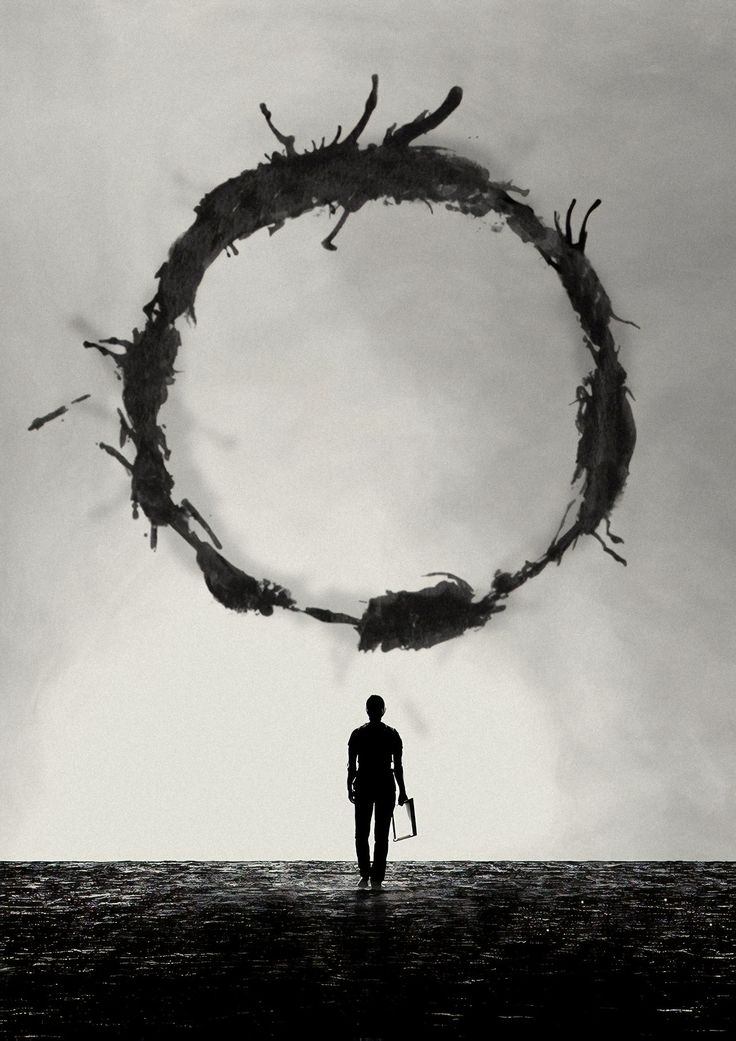
Section 1: A black silhouette of a person stands alone in the center of the image. The person is seen from behind, holding a rectangular object in one hand, and the ground is dark and flat.
Above the person, there is a large black circle in the sky. The circle looks uneven and rough, with thick and thin parts, as if it were made with dark paint or smoke. The background is light gray, almost white, and there are no other visible objects.
The image uses only dark and light colors, mostly black, gray and white. The scene looks empty and minimal, with a lot of open space around the person and the circle.
Section 2: The image appears to communicate ideas about isolation, scale, and the relationship between a human figure and something unfamiliar or symbolic. From the description, the person is small and alone, standing beneath a large, irregular black circle suspended above them. This strong contrast in size shows a message about human vulnerability or confrontation with something larger than oneself. The circle’s rough, uneven edges give a sort of presence. Because it does not resemble a precise or natural object, it may invite viewers to see it as a symbol, perhaps representing something unknown.
Space plays an important role in shaping meaning. The large empty background and flat ground create a feeling of openness and emptiness, which can amplify the solitude. This composition shows contemplation and directs attention to the relationship between the two elements.
Different viewers may interpret the work in various ways. Some might see a discovery or curiosity. Others might interpret it as an anxiety or uncertainty. Because the image avoids clear context or explanation, it remains open-ended so the audiences have their own interpretaions and emotions onto it.
Section 3: The encounter with this image depends on who has seen the movie and who has not. People who watched the film can connect it to its story and themes, such as contact with the unknown and human reaction to it. People who have not seen the film can still look at the image, but they may only see shapes and composition without understanding its deeper context. This shows that access to media and knowledge affects how fully someone can experience the work.
Inside the image, the human figure does not control the space. The large shape above creates a sense that power belongs to something beyond human control, which reflects the film’s story. Outside the image, the space of viewing is controlled by filmmakers, studios, and platforms that decide how the audience sees it.
The encounter is planned, since the scene is carefully designed to guide attention toward the relationship between the person and the form above. However, how long someone looks at it can change; some viewers may glance, while others reflect longer. Its strong contrast makes it easy to notice, but understanding it more deeply often depends on knowing the film.
Provide Feedback